Is This a Good Year to Visit Rome? You Bet
- Published on
- Author
- Reading time
- 8 mins
When people ask me why I moved to Rome a few years ago, I answer this way: There’s never been a better time to be here.
Rome has always been a playground for anyone with even an inkling of artistic and archaeological interest. Its sights, sounds and sites could keep you for months. Yes, the food is epic (more on this later,) the light is porous, velvety, addictive, the weather is year-round mild, the parks are abundant and perfect for strolling, endlessly, aimlessly.
But really, Rome's magic is more about the energy it has now. It’s infectious. Something’s bubbling under the surface, and it makes for a fun experience, ideal for those willing to explore beyond the usual.
For years, one of the most beautiful cities in the world has suffered from lethargy, relying on its languid beauty and dolce vita cliches to attract a stream of tourists that steadily increases year after year without feeling the need to upgrade or shake things up.
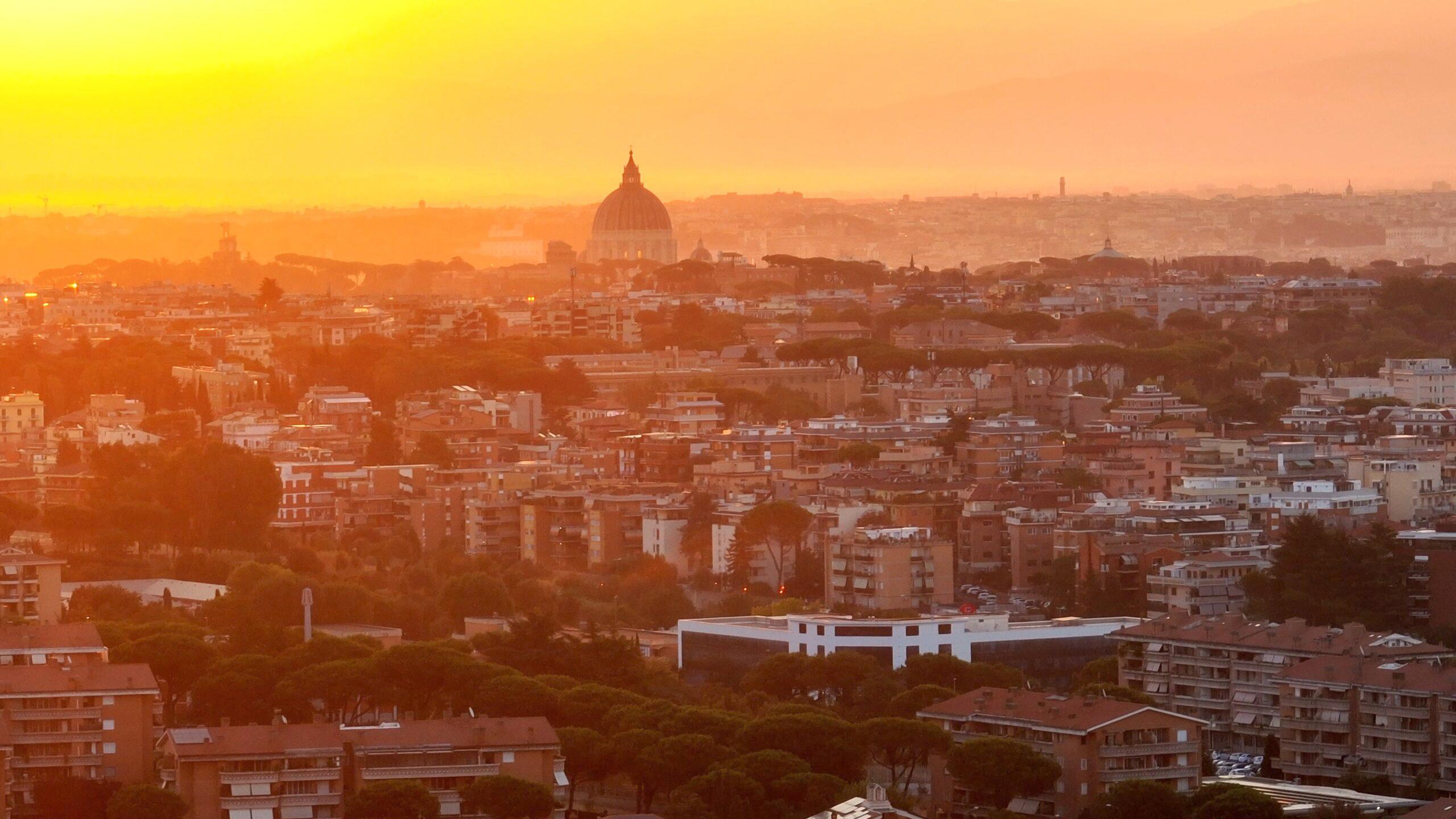
St. Peter's Basilica against the backdrop of Rome. Will the sun shine brightly on the Eternal City in this Jubilee year?/Getty Images
Things started to change as the city began making itself over for the Jubilee. It's now over but the memories remain.
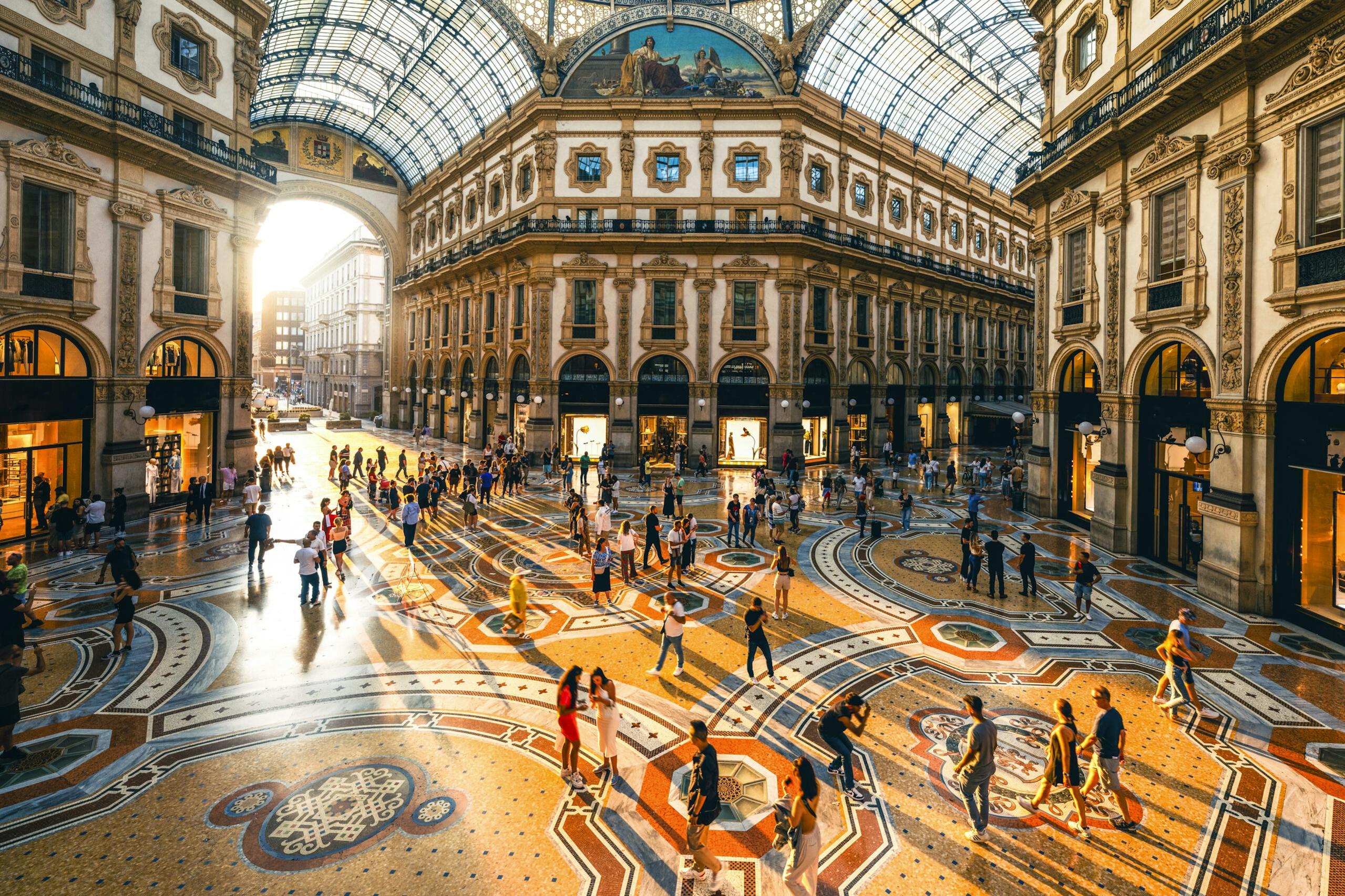
The Galleria Vittorio Emanuele II at sunset, Milan, Italy. Is a new day dawning for Rome?/Getty Images
The Jubilee is one of the several possible reasons for Rome’s newfound energy. The other is Milan. The two cities are linked by some sort of bizarre osmotic mechanism: When one is at peak, the other suffers a bit of a slump; it’s been like this ever since I can remember. Although it pains me to admit (Milan is my hometown) the Northern metropolis seems to be experiencing a bit of a stagnant streak after riding the dovetails of Expo (the 2015 World Fair) for a decade.
Whatever the reason, Rome is on the up and up, positively thriving with many things starting to heat up across town. You want a list? We’ll get there shortly.
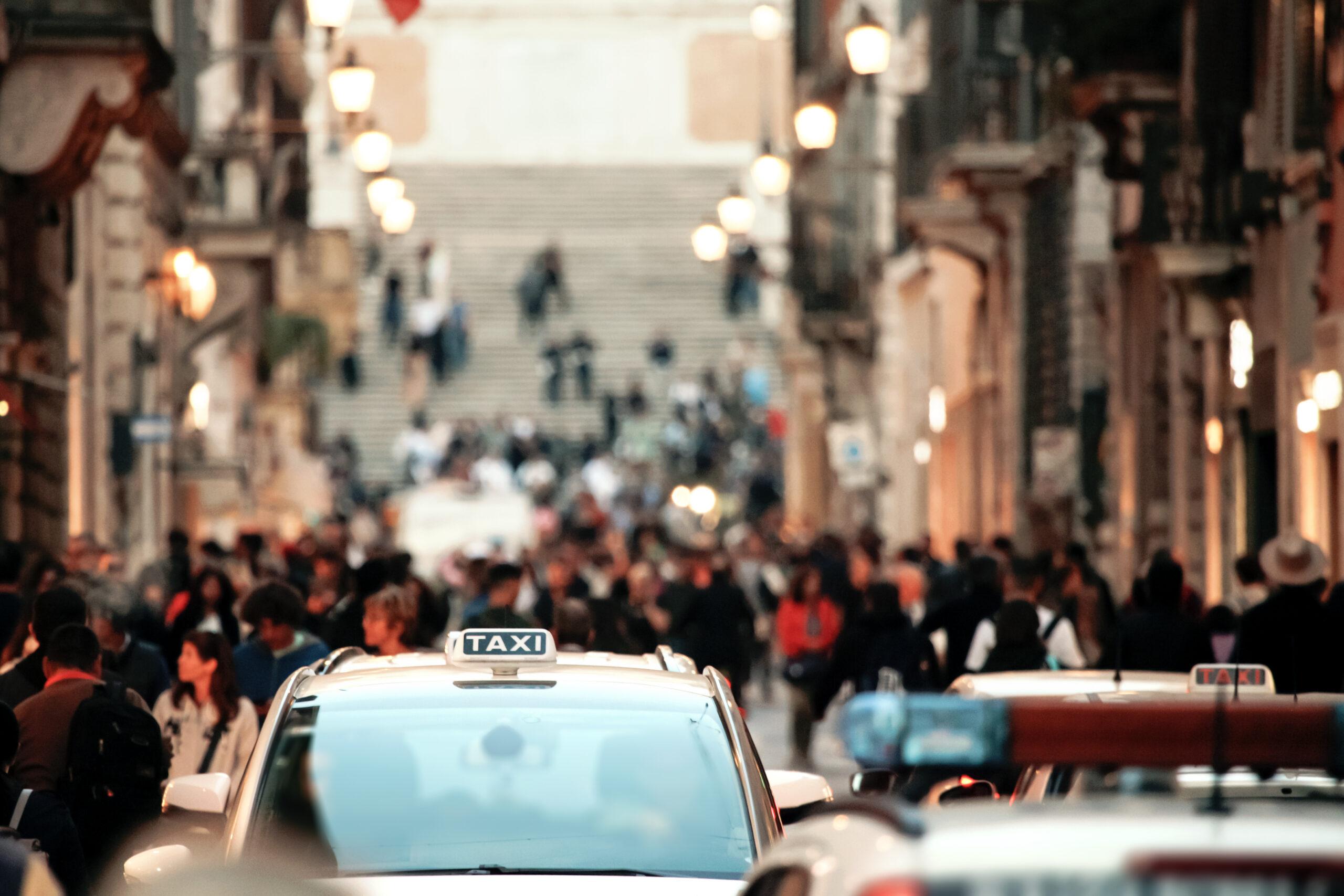
How crowded is Rome? Try the taxi test: Calculate how long it takes to hail a cab. On Via Condotti, the jammed streets hint at the answer. /Getty images
If you follow my lead and try to see it with the eyes of a local you won’t be sorry. I’ll tell you what I’d do if I were you.
Ready? Let’s go.
Rome builds on its popularity
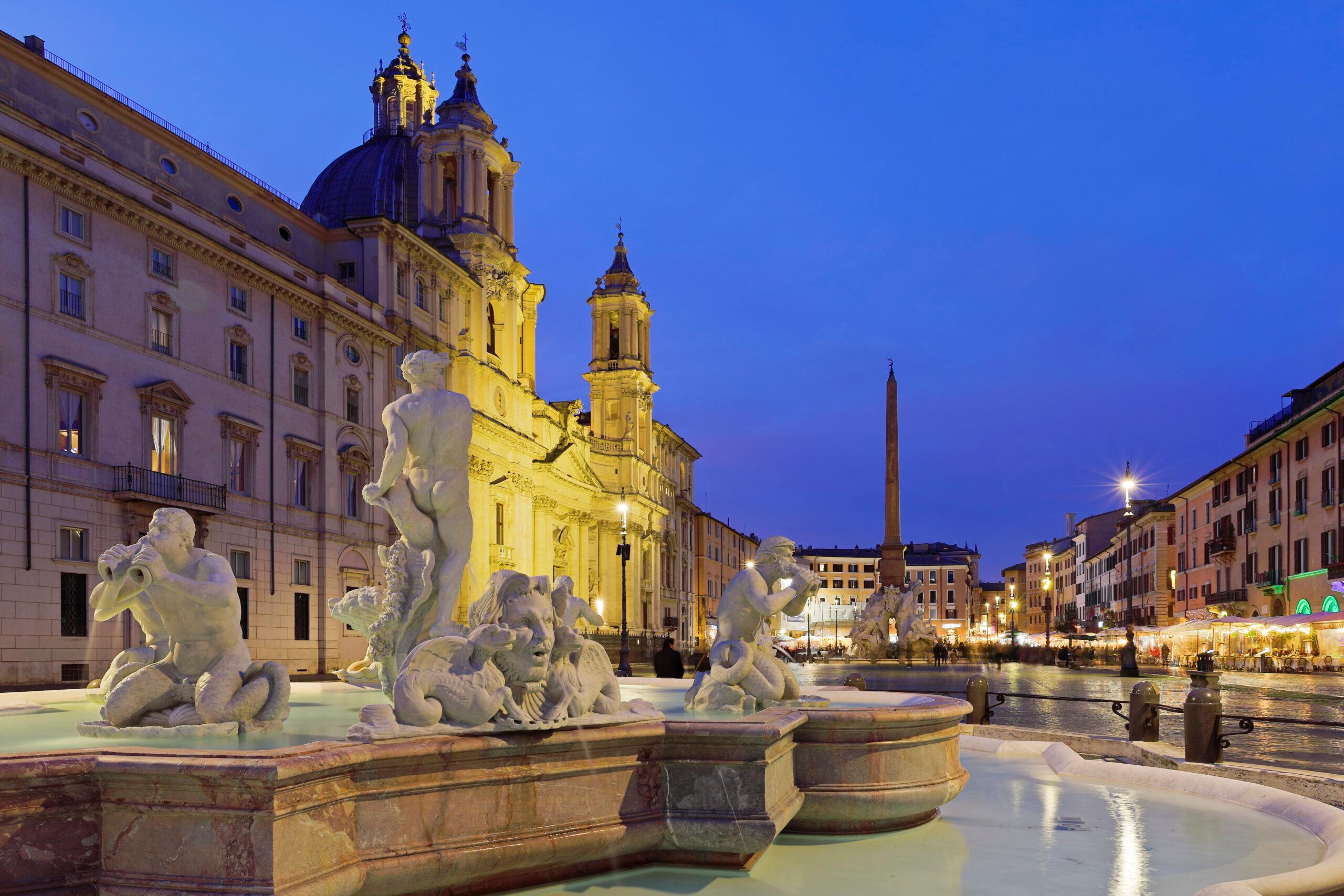
This May 2025 photo shows the newly cleaned Piazza Navona./Getty Images
For many months before the start of the Jubilee the city wrapped up some of its most iconic urban landmarks in scaffolding ornated with a gigantic Caput Mundi (head of the world) logo. At the same time, all over town, a small army of skilled serciaroli were busy replacing the city’s signature sanpietrini, the truncated pyramids that make up the oldest part of the city’s pavement.
This on top of the lagging construction sites for the new metro line (try digging tunnels in a city that is layers upon layers of historical artifacts) that added more strain to the already congested traffic. Traffic is bad, but then again, Rome is eight times the size of Milan, and a river runs through it. There are seven hills of ups and downs and a freeway junction that’s fit for Los Angeles. Traffic will happen.
Many of the Caput Mundi wrappers have gone, and freshly cleaned piazzas, fountains, and statues have emerged. Many are in the city center, such as the glorious fountains of Piazza Navona and the Passetto dei Papi, an ancient escape route for popes that connects the Castel Sant’Angelo to the Vatican. The newly designed Piazza Pia (the largest pedestrian area in Rome, with trees, fountains and bleachers) is at the foot of the castle.
The trick here is to go early in the morning, when crowds will be smaller, the rosy light of dawn is most flattering.
But if I were you I’d explore a bit farther out: Try San Giovanni in Laterano, the first of the four archbasiliche of Rome, past the Terme di Caracalla and the Appia Antica. It’s beautiful, and also framed by a new square, expansive, luminous, grandiose.
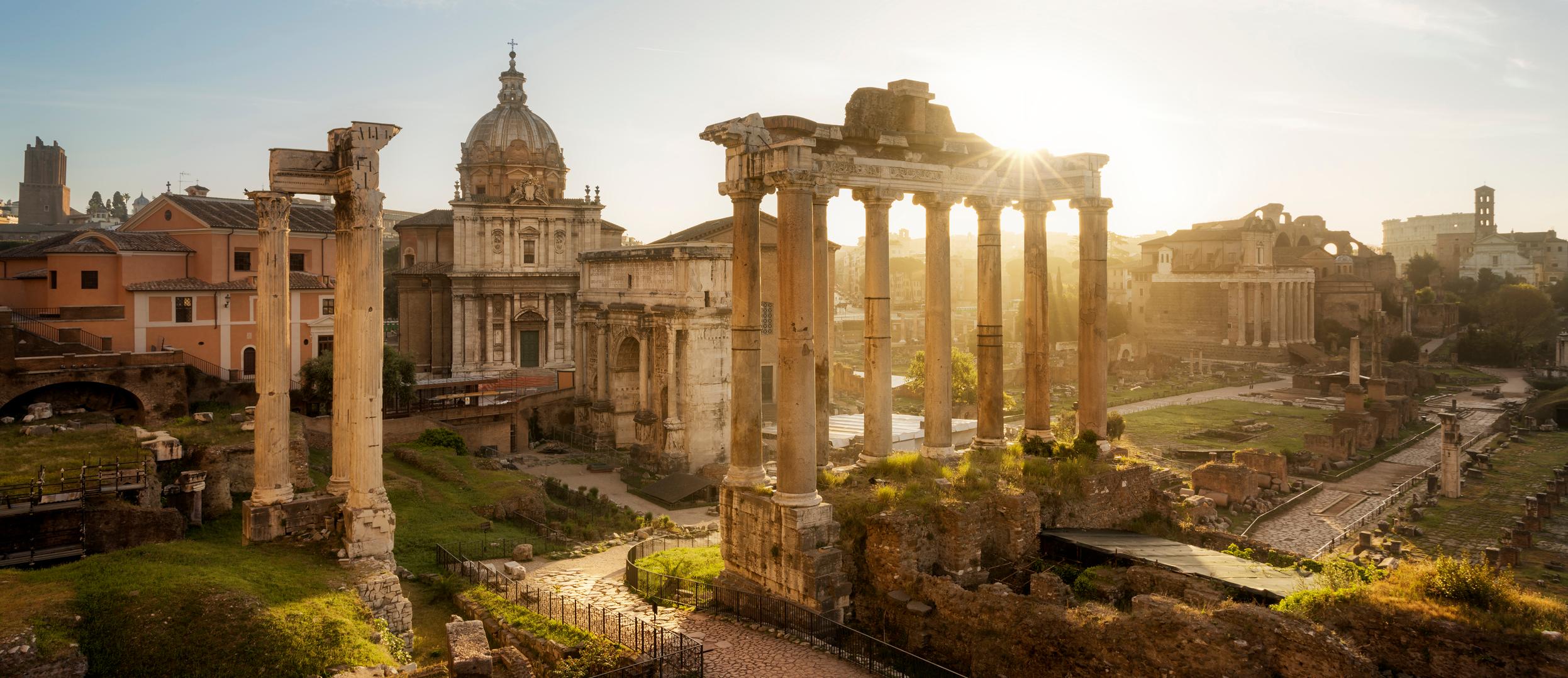
Also keep an eye on the CarMe (unfortunate acronym) the Centro archeologico monumentale, an ambitious project to connect, in a pedestrian ring, the Fori Imperiali, Colosseo, Celio, Palatino, Terme di Caracalla, Circo Massimo and Campidoglio.
If you, like me, love buildings of the non-religious kind, organize a few visits through OpenHouse Roma. The architectural association runs a yearly summer festival where hundreds of usually private sites throughout the city open their doors to the public for guided tours at universities, government buildings, private residencies, architectural firms and artist studios, even entire neighborhoods.
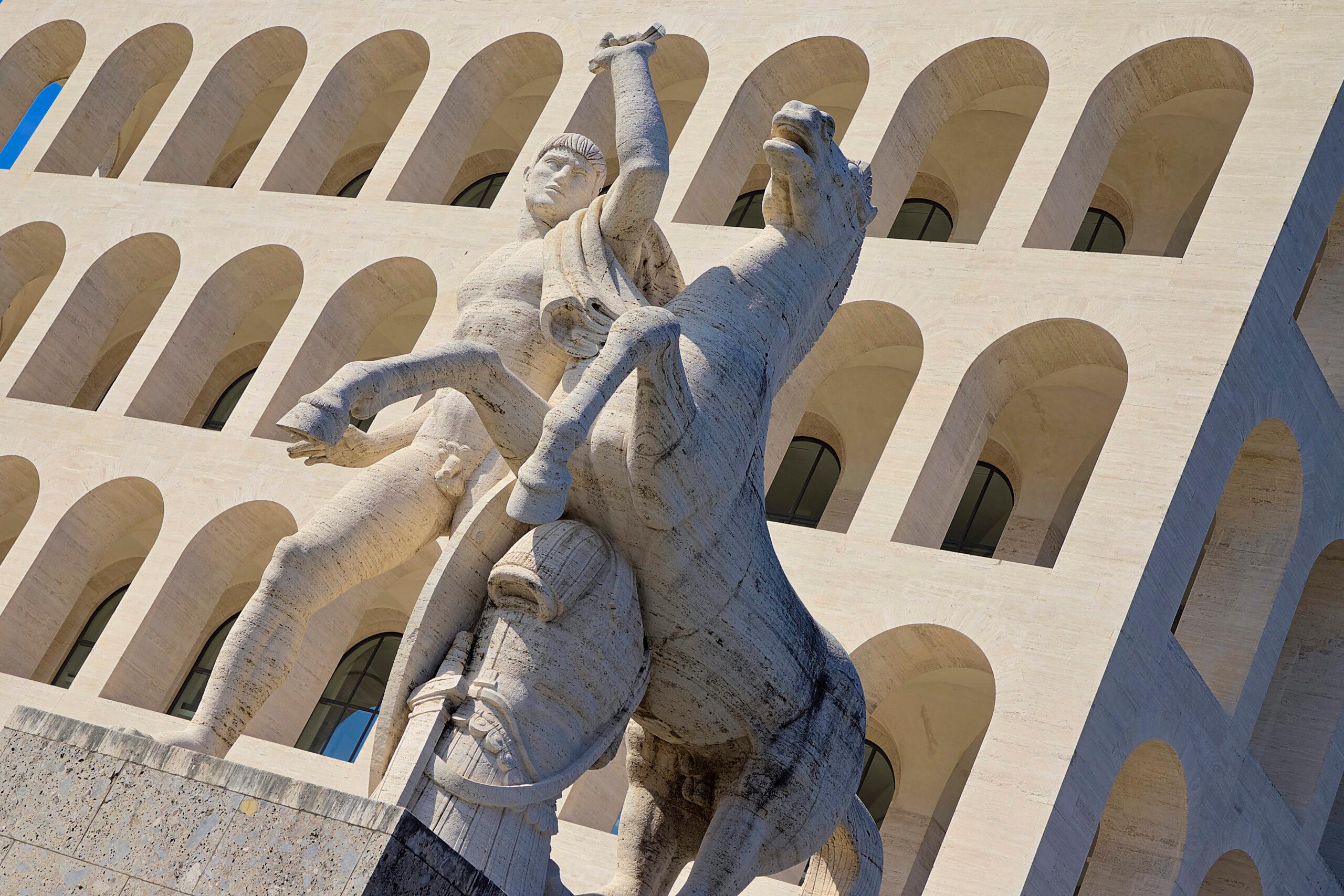
The Palazzo della Civiltà Italiana is part of the EUR district in Rome, which is filled with styles including Italian Rationalism, Brutalism and Modernism./Getty Images
Last year I toured EUR (the neighborhood) and the Gio Ponti-designed Department of Mathematics of the Università La Sapienza and it was memorable.
If you miss the festival, you can also book a handful of standalone visits, including Villa La Saracena and L’Ammonite, both a short ride from Rome, both superb. There is also RomaDiffusa, which runs a quirky artsy festival multiple times a year in always different locations, guiding people to the discovery of lesser known but no less interesting parts of town, emphasizing music, performing arts and crafts.
Food, glorious food
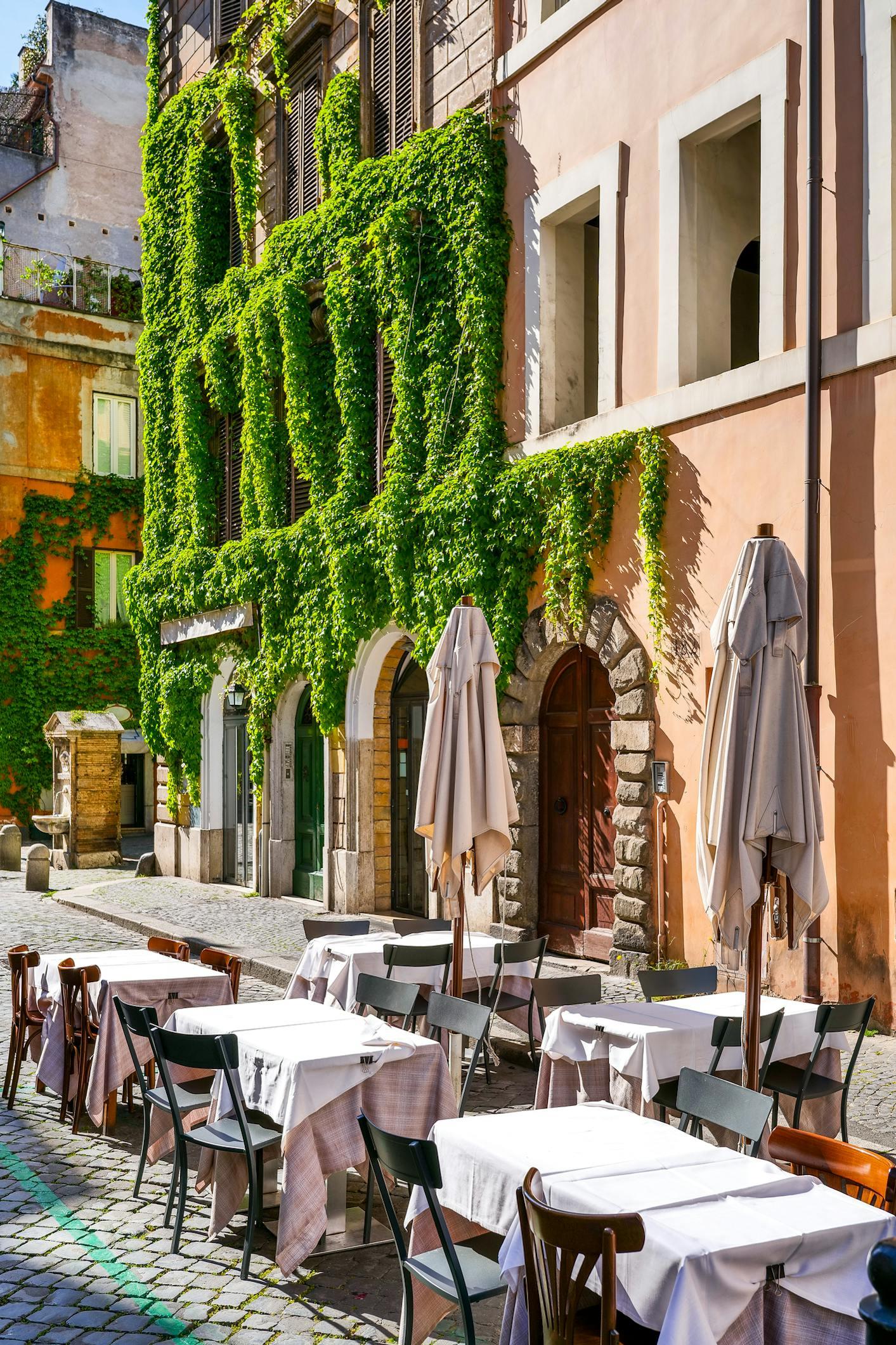
A typical restaurant in Prati, near Vatican City and the square of the St. Peter's Basilica./Getty Images
As with many things in Rome, a cultural visit can be a great excuse to try some great food. For instance, after L’Ammonite you can go to Osteria Iotto in Campagnano (a 40-minute ride from Rome), where Marco Pasquali introduced natural wines – and his delicious take on the regional culinary canon – two decades ago This is a different kind of pilgrimage, of chefs, wine producers, celebrities and gastronomic connoisseurs.
Osteria Iotto’s enduring success isn’t random. Throughout Rome and its province there’s a growing movement of trattorie – some more traditional and some more experimental, some historic and some brand new – contributing to making the food scene exciting.
For those who will dare taste something other than cacio e pepe (blasphemy? I hope not) the options are multiplying.
There’s Santo Palato, already famous, yes, but also always fully booked: It just moved to a more spacious location so you might have a better chance to try Sarah Cicolini’s cuisine. Mazzo, already a city’s must in its old location of Centocelle, has reopened with a bigger one in San Lorenzo, a vibrant, rugged-with-a-heart neighborhood close to the Termini station.
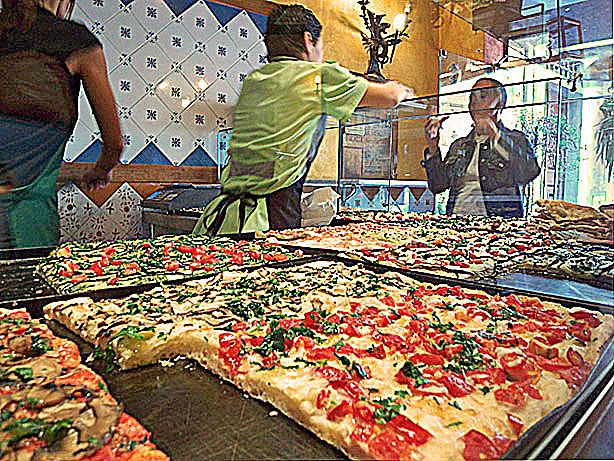
Pizza al taglio in Rome/Wikimedia Commons by Shoebill2
The Trecastelli brothers, who own Trecca (another great example of trattoria one shouldn’t really miss), have taken over a hole-in-the-wall pizza al taglio (pan sheet pizza) in Garbatella, another interesting working-class neighborhood. The pizza place, called Pantera, is soon expanding to a second location across the street from the Circo Massimo.
It’s the ideal time to indulge in multiple servings of pizza al taglio (above) in the city: you may want to try Sancho as well, one of Fiumicino’s finest slices, recently popped up in Rome’s chic Prati neighborhood. Prati is also one of the places with the highest density of fun kiosks, including former newsstands and panini stands repurposed and turned into rowdy outposts for aperitivo, often hosting good dee-jay sets as well. Jot down these names Fischio, Edicola Erno and Prato (all in Prati) and Mostro in Testaccio.
I could go on: there are new specialty coffee and natural wine bars, great music festivals and garden fairs, original ideas for short jaunts out of town (don’t forget Rome is a stone’s throw from the sea and a few great hiking trails).I’ll stop here for now.
Did I whet your appetite? Hope to see you around.