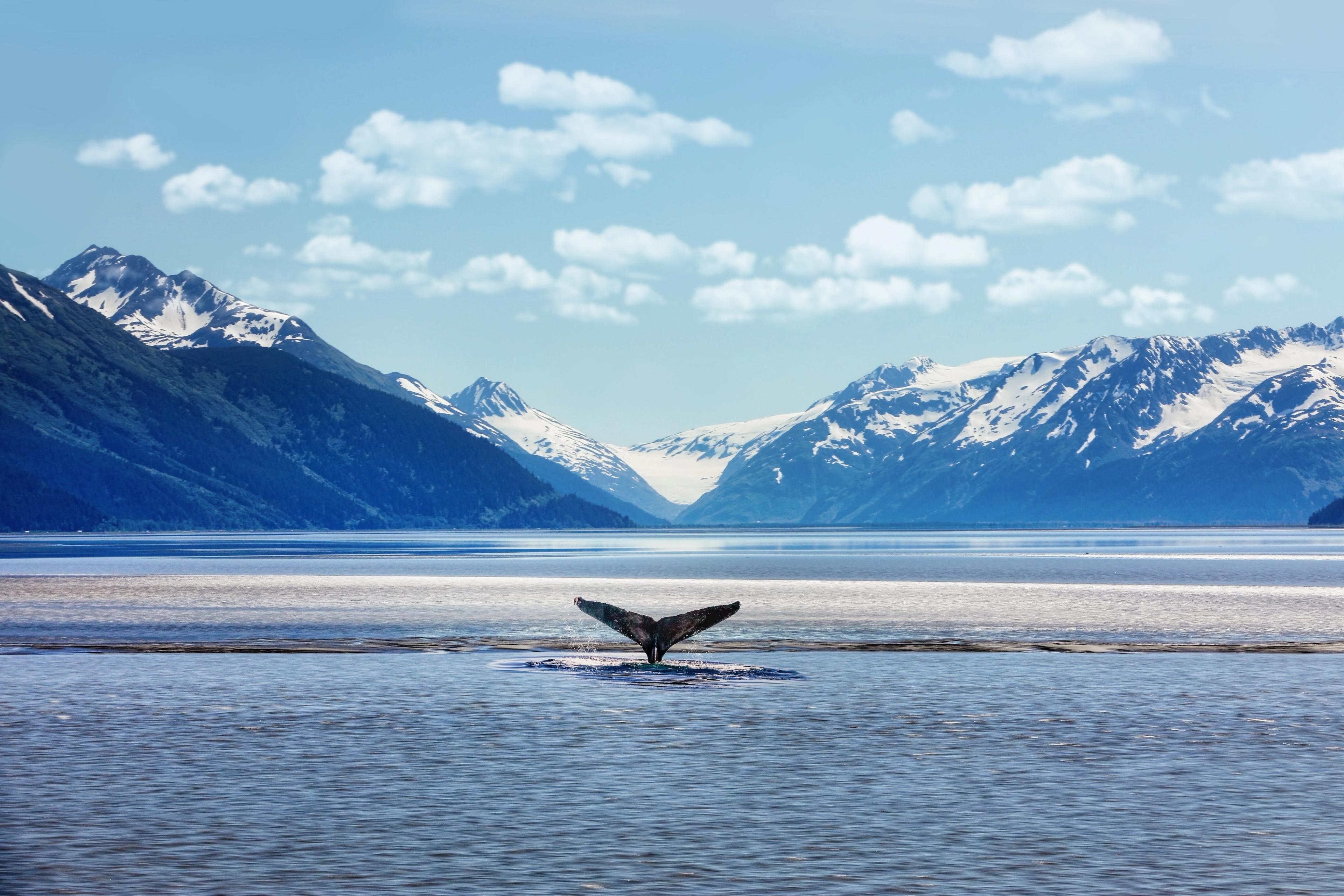
When and How to See Whales in Alaska
- Published on
- Author
- Reading time
- 7 mins
The Best Time to See Whales in Alaska (By Month & Species)

Away From Everything, Close to the Sublime
With glaciers the size of sky scrapers, bears as big as buses and snow-capped mountains that stretch high into the heavens, Alaska is an outdoor enthusiast’s dream.
The best time to see whales in Alaska is June through August, when humpbacks and orcas are at their most active and sightings are almost guaranteed. But Alaska’s whale-watching season spans April through September, and each species follows its own rhythm:
- April–May (Gray Whales): Migrating north from Baja California, gray whales are the first to arrive and can often be spotted close to shore in spring.
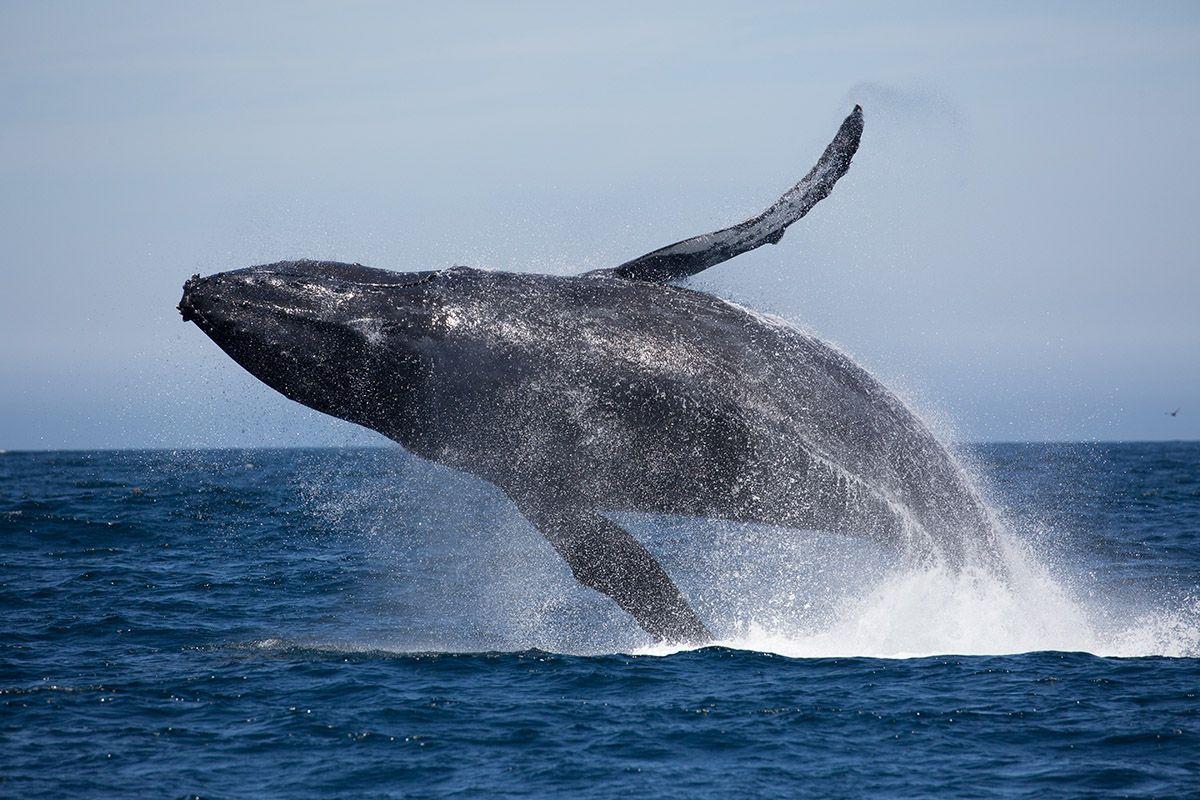
- May–September (Humpbacks): Thousands of humpbacks return to Alaska each summer to feed, performing dramatic breaches and bubble-net feeding. Activity peaks in June, July, and August.
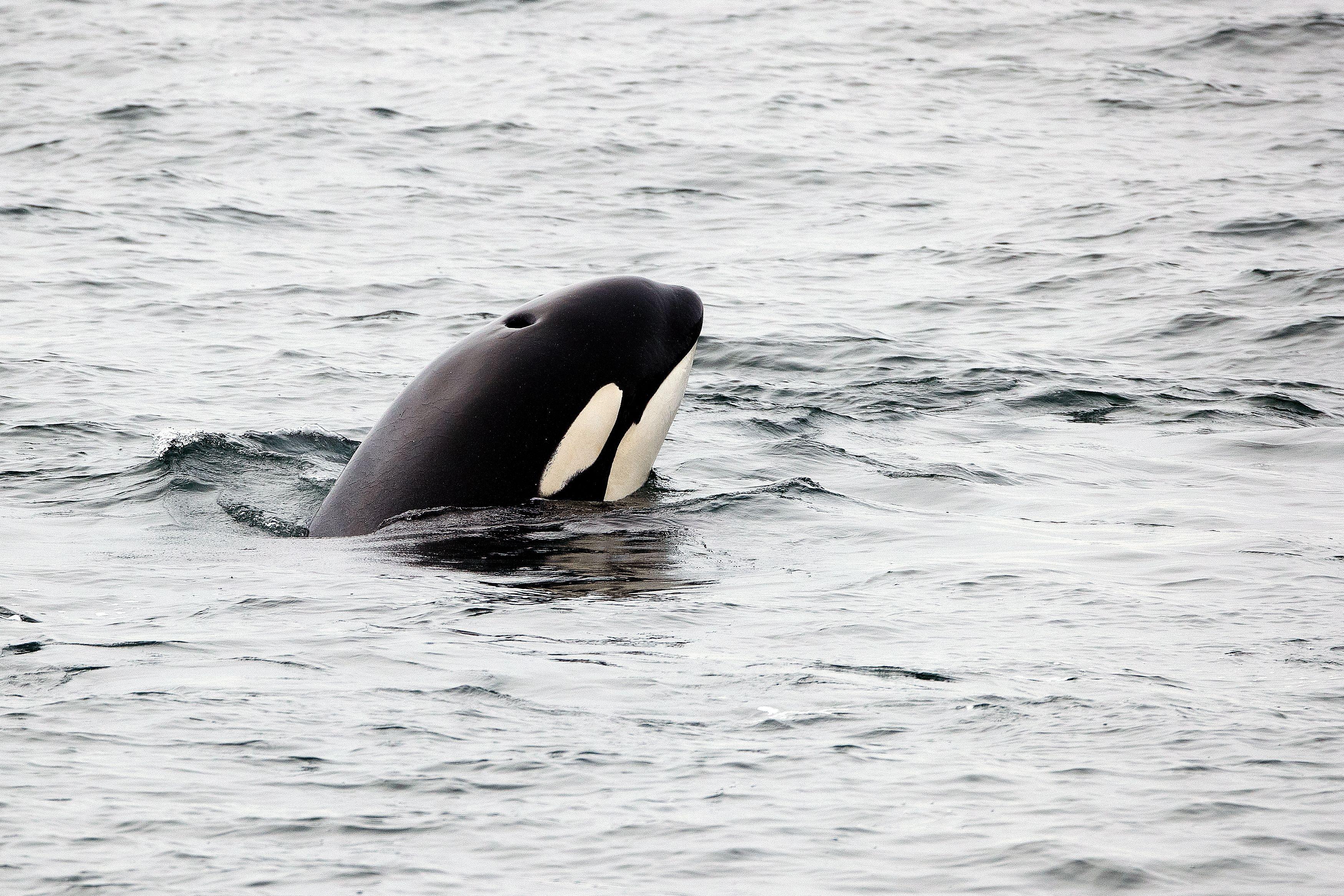
- May–September (Orcas/Killer Whales): Orcas can appear all season, but are especially common mid-May to mid-June in Kenai Fjords and July–August in Southeast Alaska.
- Late Summer (Fin & Minke Whales): These species are harder to find but sometimes appear in late August and September.
The Best Time of Day to See Whales in Alaska
Whales surface throughout the day, but the best time of day to see whales in Alaska is often the morning. Early departures usually mean calmer seas, making it easier to spot spouts and tail flukes. The softer light also creates ideal conditions for photography. That said, Alaska’s long summer days — with up to 18 hours of daylight — mean afternoon and evening tours are equally rewarding. Humpbacks typically surface every 10–15 minutes, so patience pays off no matter the time. In short: whales don’t keep a clock, but morning calm and evening glow make both ends of the day especially memorable.
The Best Places to See Whales in Alaska
Whales can be seen along much of Alaska’s coast, but a few regions stand out for reliable sightings. These areas combine rich feeding grounds with convenient access for cruise ships and excursions, making them the best places to watch humpbacks and orcas in action. Here are some of the best places to see whales in Alaska:
- Juneau (Auke Bay & Stephens Passage): Juneau is one of Alaska’s whale-watching capitals. Tours departing from Auke Bay regularly encounter humpbacks feeding in summer, while nearby Stephens Passage is also known for orcas. With high sighting success and stunning scenery, Juneau is a top choice.
- Icy Strait Point & Point Adolphus: Near Glacier Bay, this region is world-famous for humpback feeding. Point Adolphus, in particular, boasts one of the highest concentrations of humpbacks in Alaska, with daily sightings in summer.
- Kenai Fjords National Park (Seward): This area offers a mix of humpbacks, orcas, and dramatic landscapes. Orca activity peaks from mid-May to mid-June, while humpbacks feed here throughout the summer against a backdrop of glaciers and cliffs.
- Sitka & Ketchikan: Both ports provide opportunities to see humpbacks in summer. Sitka, with its exposed coastlines, often sees feeding whales close to shore, while Ketchikan combines whale sightings with rich cultural excursions.
How to See Whales in Alaska
The most rewarding way to see whales in Alaska is on a cruise through the Inside Passage and Glacier Bay. Sailing these waters puts you directly into prime whale habitat, where sightings can happen at any time of day — a humpback breaching in the distance, or a pod of orcas passing close to the ship’s bow. Cruising also unlocks shore excursions designed to bring you even closer:
- Exclusive Luxury Whale Watch (Juneau): A private yacht led by a naturalist, offering intimate encounters with humpbacks and orcas.
- Discover Alaska’s Whales (Juneau): A small-group research vessel outing, where guests learn about whale behaviors and sometimes listen in on hydrophones.
- Wildlife Cruise & Native Art (Ketchikan): A cultural and wildlife experience that combines whale sightings with an immersive visit to Metlakatla.
These curated excursions transform seeing whales in Alaska on a cruise into more than a chance encounter — they create moments of connection with the wildlife, landscapes, and communities that make Alaska so extraordinary.
Whale Watching Tips for Alaska
- Bring binoculars for the details. Even when whales surface close to a ship or excursion vessel, the finer moments — the ripple of a fluke, the spray of a blowhole — are easier to catch with binoculars. They also help you scan the horizon for distant spouts before the guides call them out.
- Dress in layers for changing conditions. Alaska’s weather is famously unpredictable, and temperatures can shift quickly once you’re out on open water. A lightweight jacket, windbreaker, or even a hat can make the difference between shivering on deck and staying comfortably focused on the whales.
- Keep your camera ready. Whale behavior happens in an instant — a breach, a tail slap, or a sudden pod surfacing. Setting your camera to a faster shutter speed and keeping it accessible means you’re ready when the moment comes, instead of fumbling after it’s gone.
- Practice patience. Humpbacks often dive for 10 to 15 minutes at a time before resurfacing. Staying attentive and relaxed during those gaps pays off when the whale finally reappears with a dramatic exhale or leap from the water.
- Follow the lead of naturalists and guides. On cruises and excursions, experts often spot subtle signs before anyone else — a ripple, a sudden flock of seabirds, or the timing of a dive. Their guidance not only increases your chance of sightings but also helps you understand the whales’ behavior.
Whale watching is always unpredictable — and that’s part of the thrill. With the right preparation, every sighting feels like a gift and becomes one of the most unforgettable moments of an Alaska journey.
Discover Whale Watching on a Silversea Cruise
Whale watching in Alaska isn’t just about spotting wildlife — it’s about the setting in which it happens. On a Silversea cruise, sightings unfold against a backdrop of fjords, glaciers, and endless summer light. You might see humpbacks feeding while you sail through the Inside Passage, or orcas cruising past as you approach Glacier Bay. In port, thoughtfully designed excursions add even more depth, whether you’re joining a naturalist on a private yacht or combining wildlife viewing with cultural experiences in coastal villages. With Silversea, whale watching becomes part of a seamless journey that blends comfort, discovery, and the raw beauty of Alaska. Explore Alaska Cruises with Silversea.