The 10 Most Beautiful Mediterranean Sea Beaches to Visit
- Published on
- Author
- Reading time
- 17 mins
The Mediterranean has long drawn travelers to its shores, where mornings begin with fishing boats pulling into quiet harbors and afternoons stretch across turquoise coves framed by cliffs and historic towns.
Along its coastlines, the scenery shifts from polished Riviera bays and long urban promenades to remote coves backed by cliffs, pine forests, and basaltic rock. Some beaches are defined by soft white sand and shallow turquoise water, while others are made up of pebbled shores, hidden grottoes, or dramatic limestone formations.
Part of what makes beaches on the Mediterranean Sea so wonderful is how closely they reflect the landscape and cultures around them. In the south of France, beaches blend into elegant coastal towns and harbors, while across the Greek Islands, secluded coves feel rugged and elemental. Even within a single country, such as Italy, beach experiences can vary dramatically from one coastline to another. Here’s a look at the 10 best beaches on the Mediterranean Sea to visit.
This is our home, our sea. Enjoy it.
Blessed by sapphire waters, medieval cities, mouth-watering gastronomy and history that dates back for centuries, the Mediterranean is a region that never fails to deliver.
What makes Mediterranean beaches different?
One reason beaches on the Mediterranean Sea feel so distinct from beaches elsewhere in the world is the region’s geography. Unlike long stretches of uninterrupted coastline found in parts of the Caribbean or Florida, Mediterranean shores are often surrounded by mountains, cliffs, coves, and historic port towns. The result is a beach experience that changes dramatically from one destination to the next.
In parts of southern France and the Italian Riviera, beaches are closely tied to elegant coastal cities, yacht harbors, and promenades lined with cafes and hotels. Along the Greek Islands, beaches tend to feel more rugged and elemental, with rocky cliffs, hidden coves, and brilliant blue water created by volcanic and limestone landscapes.
The Mediterranean is also known for its diversity of shoreline types. Travelers will find smooth pebbled beaches along the Riviera, soft sand in parts of Spain and Greece, volcanic beaches in destinations such as Santorini, and dramatic rocky coves throughout Sardinia, Croatia, and Turkey.
In many Mediterranean destinations, beaches sit right beside historic towns rather than resort zones, connecting beaches to everyday life. Because so many of the region’s coastal cities developed around maritime trade, many beaches sit surprisingly close to cruise ports and historic centers. Visitors can spend the morning exploring ancient streets or local markets before heading directly to the sea for an afternoon swim.
The best Mediterranean Sea beaches
The most beautiful Mediterranean beaches are visibly striking, and when you arrive on a Mediterranean cruise, guests get their first glimpse of cliff-lined coves, harbors filled with the masts of sailboats, and historic harbors. Across the region, these beaches range from lively urban waterfronts to isolated stretches of coastline, revealing why the Med remains one of the world’s most enduring coastal destinations.
1. Paloma Beach — Saint-Jean-Cap-Ferrat, France
On the quiet peninsula of Saint-Jean-Cap-Ferrat, Paloma Beach is a more understated side of the French Riviera. The sheltered cove is known for calm, glassy water framed by pine-covered hillsides and elegant villas that climb the rocky shoreline. Unlike some of the Riviera’s busier beach clubs, the atmosphere here feels comparatively relaxed and residential. Its location between Nice and Monaco makes it a natural stop for guests exploring this stretch of the coast.
The beach itself is a mix of pebbles and small gravel, typical of this stretch of coastline, but the water is exceptionally clear and often calm enough for swimming. Views extend across the bay toward Beaulieu-sur-Mer and the cliffs beyond.
The surrounding peninsula is also known for some of the Riviera’s most beautiful coastal walks. Paths along the beach follow the shoreline, affording panoramic views of the Mediterranean.
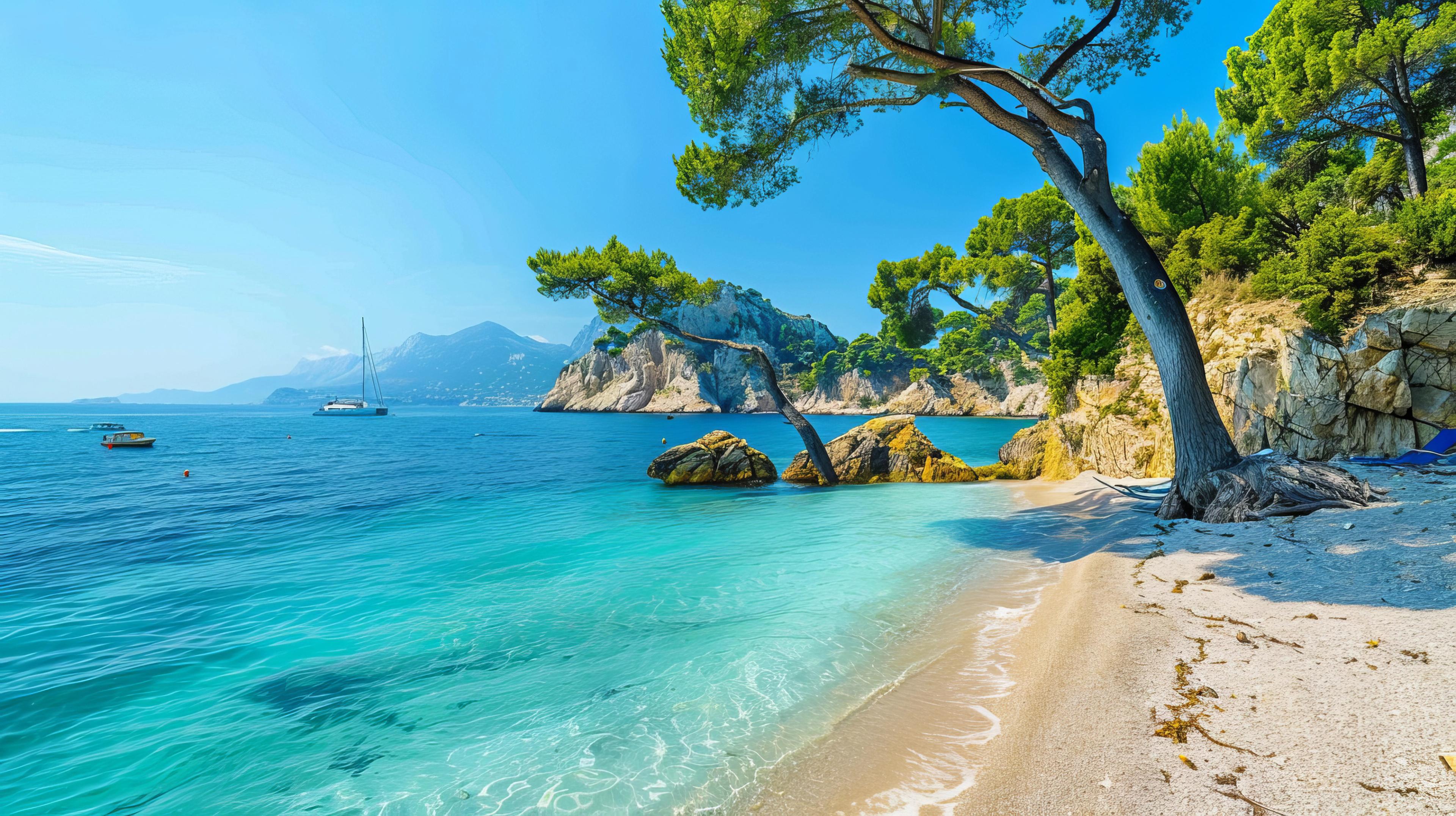
View of Paloma beach in Saint-Jean-Cap-Ferrat on the French Riviera, France
2. Plage de la Promenade des Anglais — Nice, France
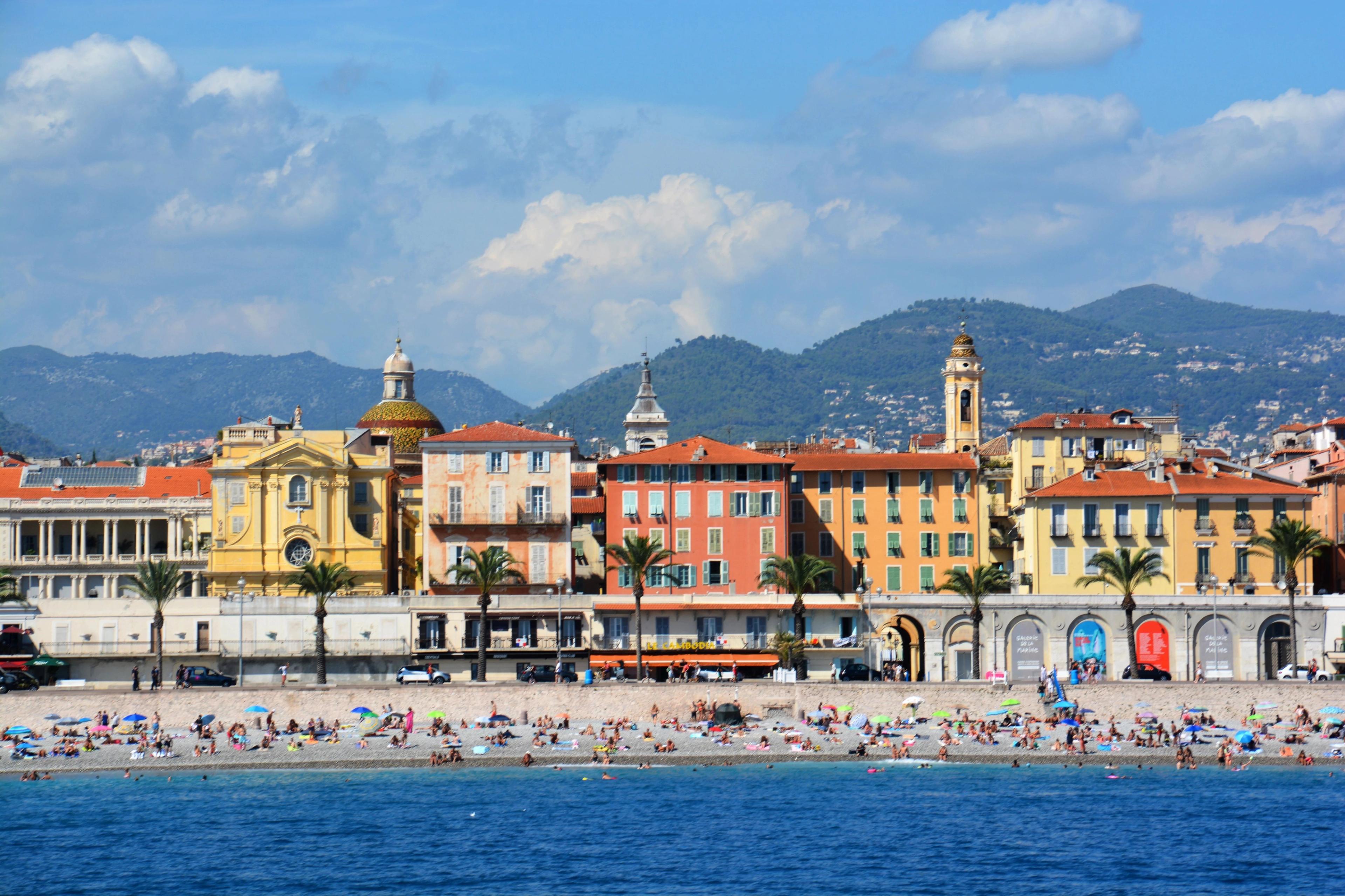
Few Mediterranean beaches are as recognizable as the shoreline that runs along Nice’s famous Promenade des Anglais. Stretching beside the city’s sweeping bay, the beach combines Riviera scenery with the energy of an active urban waterfront.
The shoreline here is also made of pebbles rather than sand, but the vivid blue water and wide-open coastal views provide one of the Mediterranean’s classic seaside settings. The promenade itself adds to the experience, lined with historic hotels, cafes, and beach clubs, providing high energy during warmer months.
What makes this beach distinctive is the contrast between city and sea life. Visitors can spend the morning walking through markets and museums before walking directly onto the waterfront for an afternoon swim.
3. Poetto Beach — Cagliari, Sardinia
Poetto Beach brings Sardinia’s clear water and easygoing seaside rhythm close to the island’s capital. Stretching along the Gulf of Cagliari, this broad sandy shoreline offers a different side of Sardinia than its remote limestone coves — more accessible, more local, and closely tied to daily life in the city.
The beach runs for several miles, with shallow water, open views, and the distinctive silhouette of Sella del Diavolo rising at one end. During warmer months, locals gather here for morning swims, long lunches, and evening walks along the waterfront.
Its proximity to Cagliari also makes Poetto especially appealing for travelers who want to pair beach time with culture. A day here can move from the city’s historic quarters and markets to the sea, where Sardinia’s natural beauty sits just beyond the urban edge.
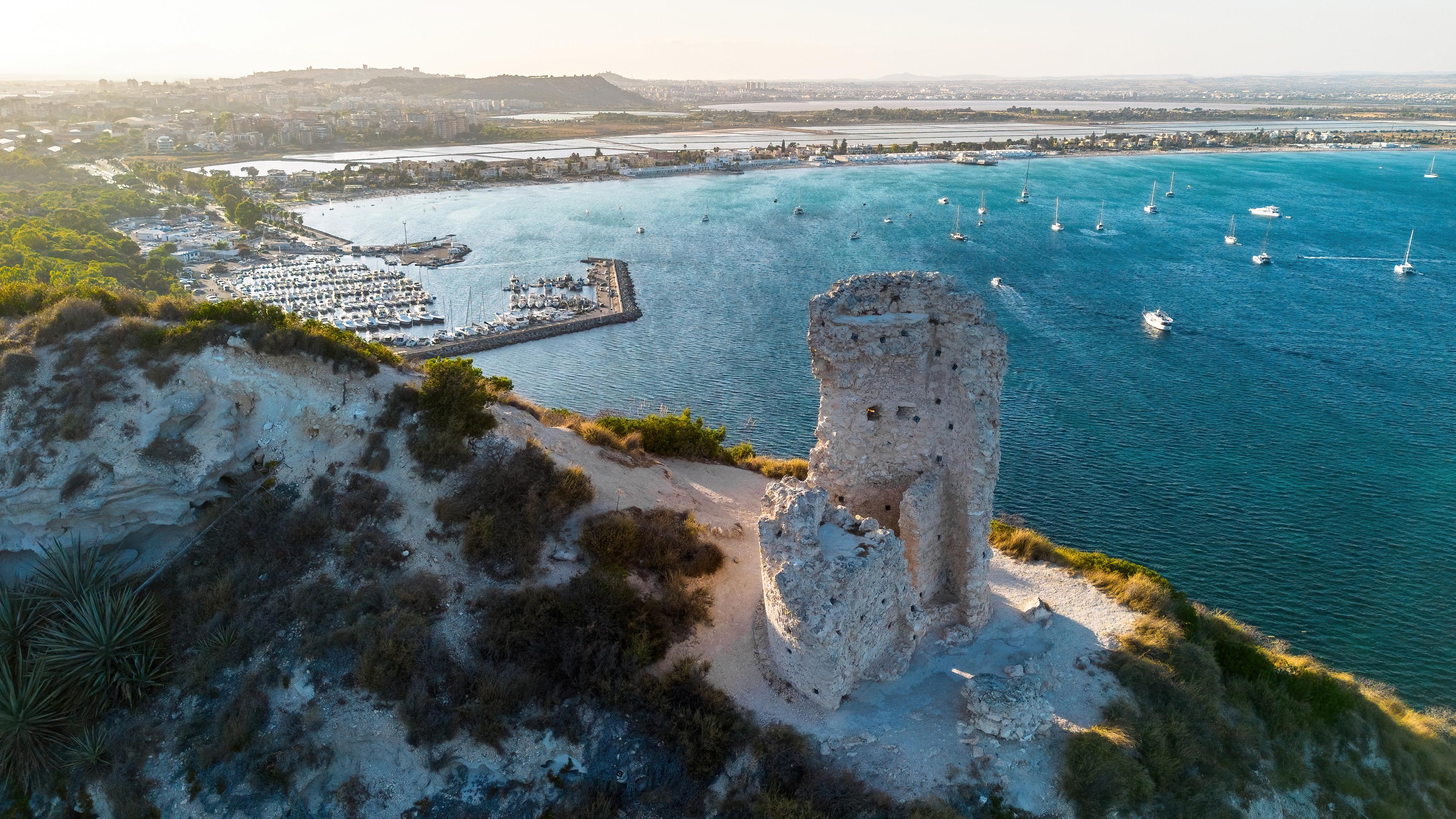
Ruins of Torre del Poetto overlooking Poetto Beach, Cagliari, Sardinia, Italy
4. Sansone Beach — Elba, Italy
On the island of Elba, Sansone Beach is known for clear water, pale pebbles, and cliffs that give the shoreline a bright, almost luminous quality. The beach sits along the island’s northern coast, not far from Portoferraio, making it a natural fit for guests exploring Elba during a Mediterranean voyage.
The setting feels quieter than many larger Italian beach destinations. Smooth stones line the shore, while the water shifts between transparent aqua and deep blue just beyond the rocks. On calm days, the clarity makes it especially appealing for swimming and snorkeling.
Like much of Elba, Sansone Beach pairs natural beauty with a sense of layered history. After time by the water, guests can return to Portoferraio to explore harbor views, hillside streets, and the island’s Tuscan character.
5. Cala d’Hort — Ibiza, Spain
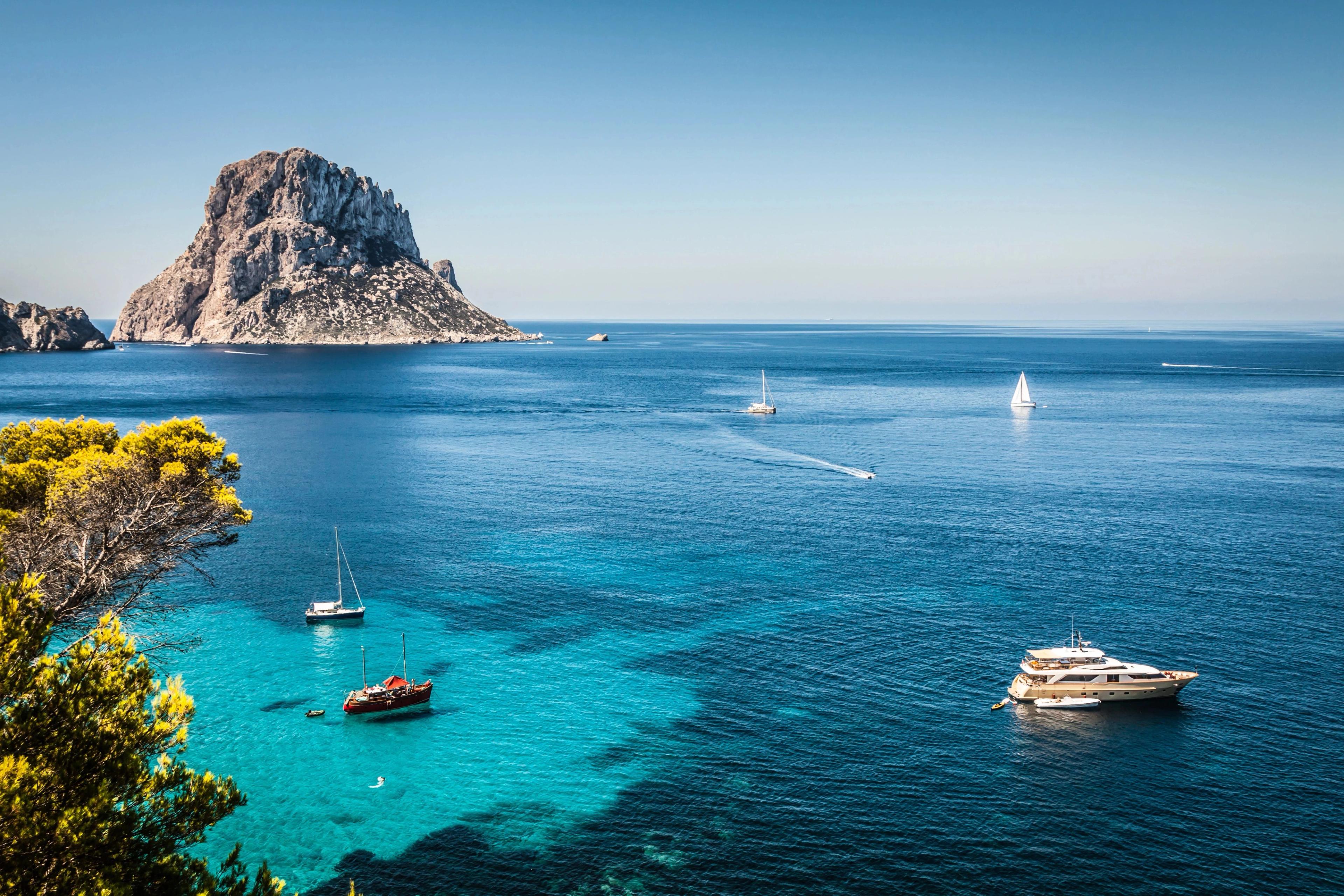
Cala d’Hort reveals the quieter spell of Ibiza. Set on the island’s southwestern coast, this small sandy beach looks toward Es Vedrà, the rocky, uninhabited island that rises dramatically from the sea and has long inspired local legends.
The setting feels almost cinematic: clear shallow water, pine-fringed cliffs, fishing boats resting offshore, and the silhouette of Es Vedrà shifting with the light. Spend time swimming close to shore, linger over seafood at a nearby restaurant, or arrive later in the day as the sky begins to turn pink and gold.
For travelers who know Ibiza only by reputation, Cala d’Hort offers a different perspective. Here, the White Isle feels serene, elemental, and deeply atmospheric — a place shaped as much by myth and sea air as by sand and sun.
6. La Malagueta Beach — Málaga, Spain
La Malagueta Beach brings the Mediterranean directly into Málaga’s city rhythm. Set beside the city’s waterfront, this broad urban beach offers soft sand, calm water, and an easy connection to the historic center, where Moorish fortresses, shaded plazas, and the flavors of Andalusia wait just beyond the shore.
Its appeal is effortless. Spend the morning wandering past the Alcazaba or through the streets around the Picasso Museum, then follow the promenade toward the water for a swim, a walk, or a leisurely lunch at a beachside chiringuito. The beach feels unmistakably local — part seaside escape, part everyday ritual.
For travelers arriving in Málaga, La Malagueta is one of the simplest ways to experience the Costa del Sol without leaving the city behind. Here, culture and coastline sit side by side, joined by the sound of the sea and the scent of grilled sardines drifting from the shore.
7. Psarou Beach — Mykonos, Greece
Clear water and polished beach clubs define this sheltered stretch of coastline on Mykonos, perfectly suited to the island’s stylish reputation. The bay’s protected position helps keep the water calmer than other beaches around the island, creating ideal swimming conditions during summer.
Unlike the more rugged Greek island beaches, the experience here centers as much on the social atmosphere as on the scenery itself. Restaurants, loungers, and upscale beach clubs line the shore, while yachts regularly anchor offshore throughout the season.
Even with its lively reputation, the water remains the main attraction, glowing bright blue against the whitewashed Cycladic landscape that has made Mykonos famous.
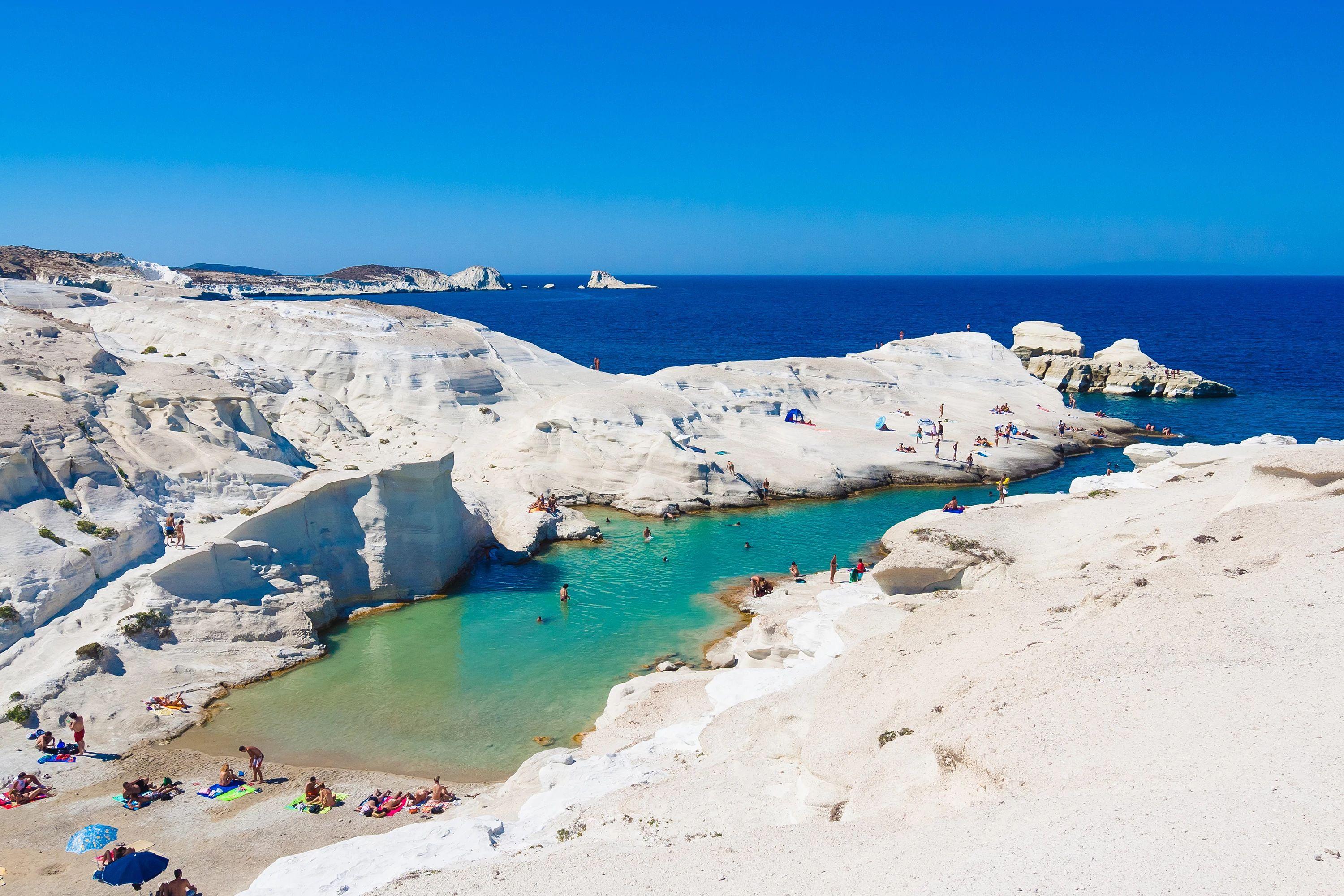
8. Sarakiniko Beach — Milos, Greece
Sarakiniko Beach is one of the most distinctive coastal landscapes in the Greek Islands, shaped by pale volcanic rock that curves and folds around the Aegean Sea. Instead of a traditional sandy shoreline, smooth white formations create natural ledges, inlets, and swimming spots where the water shifts from glassy turquoise to deep blue.
The beach sits on Milos, an island known for colorful fishing villages, volcanic geology, and dramatic coves. For guests visiting Milos, Sarakiniko offers a striking contrast to the island’s softer beaches, with a sculptural quality that feels almost lunar beneath the Mediterranean sun.
Its beauty lies in that contrast: white stone, blue water, and open sky, all meeting in one of Greece’s most memorable seaside settings.
9. Banje Beach — Dubrovnik, Croatia
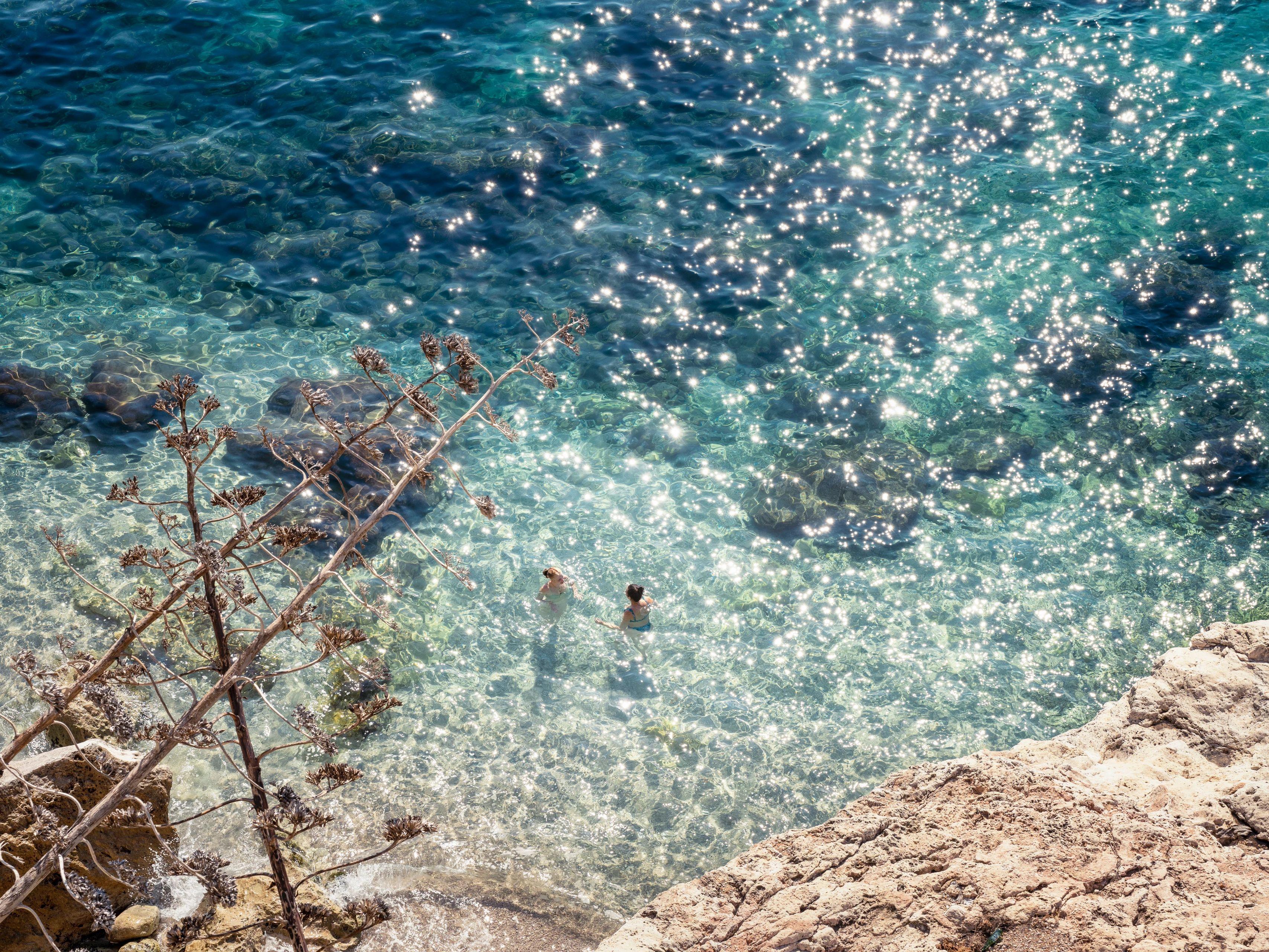
Just beyond Dubrovnik’s medieval walls, Banje Beach combines clear Adriatic water with one of the Mediterranean’s most recognizable historic backdrops. From the shoreline, swimmers and sunbathers look directly toward the city’s fortified Old Town and Lokrum Island beyond.
The setting creates a very different atmosphere from more secluded Mediterranean coves. Here, beach time blends naturally with sightseeing, with visitors often moving between Dubrovnik’s stone streets and the waterfront throughout the day.
The beach’s accessibility also makes it appealing for cruise guests wanting time by the sea without venturing far from the city center.
10. Mandarin Oriental Blue Beach — Bodrum, Turkey
A short drive from Bodrum port, Mandarin Oriental Blue Beach offers a polished way to experience Turkey’s Aegean coast. The setting combines soft sand, turquoise water, and a calm beachfront atmosphere, with the hills and coves of Bodrum unfolding nearby.
Guests traveling can reach the beach through Serenity by the Sea at Mandarin Oriental, a Silversea Highlight Experience that includes a scenic drive along the coast and easy access to the beach area by buggy transfer. Once there, the day can unfold at a slower rhythm: time on the sand, a swim in the clear water, a walk along the beachfront, or a quiet pause by the nearby pool.
Lunch by the water, served with a chilled glass of local wine, adds another layer to the experience. It is a seamless way to enjoy the Bodrum coastline — relaxed, scenic, and close enough to return comfortably to the port.
For a different view of the coast, the Aegean Coastal Cruise by Gulet experience takes guests aboard a traditional Turkish wooden vessel for a half-day journey along the water. The route passes Karaada, also known as Black Island, and includes time to swim near Poyraz Limani and around Karaada, where coves, inlets, and small islands rise from the turquoise Aegean Sea.
Lunch by the water, served with a chilled glass of local wine, adds another layer to the experience. It is a seamless way to enjoy the Bodrum coastline — relaxed, scenic, and close enough to return comfortably to the port.
When is the best time to visit Mediterranean beaches?
The best time to visit Mediterranean beaches depends on the kind of experience you want to have. Summer brings the warmest water, longest days, and liveliest beach atmosphere, especially in destinations such as the French Riviera, Mykonos, Croatia, and the Balearic Islands. Peak summer is best for travelers who want beach clubs, boat days, and a high-energy atmosphere.
For a quieter trip, visit during the late spring or early autumn. May, June, September, and early October can bring perfect temperatures, fewer crowds, and a more relaxed experience. The sea is usually warmer in early autumn than in spring, especially after months of summer heat.
FAQs about Mediterranean Sea beaches
Which Mediterranean beaches are best for families?
The best Mediterranean beaches for families usually have calm water, easy access, nearby restaurants, and space to settle in for a few hours. La Malagueta Beach in Málaga is a strong choice because it sits close to the city center, with a wide shoreline and promenade nearby. Poetto Beach in Cagliari also works well for families thanks to its long sandy stretch, shallow water, and easy connection to the city. For families who want beach time with sightseeing, Banje Beach in Dubrovnik offers clear water close to the Old Town.
Where are the clearest water beaches in the Mediterranean?
Some of the clearest water beaches in the Mediterranean are found in Sardinia, Ibiza, the Greek Islands, Croatia, and Turkey’s Aegean coast.
What types of beaches are found in the Mediterranean?
Beaches on the Mediterranean Sea vary widely. Some have soft white sand, while others are pebbled, rocky, or framed by cliffs. You’ll find volcanic beaches, urban beaches, beach-club destinations, and remote bays reachable by boat or hiking trail.
How do you plan a Mediterranean beach trip?
A Mediterranean cruise can make it easier to experience several coastlines in one trip, notably in regions where beaches are close to historic ports and coastal towns. When planning a cruise, a Mediterranean beach trip is easiest to plan by deciding whether you want scenery, swimming, beach clubs, cultural sightseeing, or a mix of all four.
Which Mediterranean beaches are best for swimming?
Beaches with sheltered coves and calm water are often best for swimming. Protected coves in Ibiza, Turkey, and parts of Greece often provide calm conditions during summer.
What is the best Mediterranean beach destination for first-time visitors?
The French Riviera, the Greek Islands, and parts of Spain’s Balearic Islands are often good starting points because they combine scenic beaches with easy transportation, restaurants, hotels, and cultural attractions nearby. Destinations such as Nice and Dubrovnik also allow travelers to combine beach time with historic sightseeing.
What should I pack for Mediterranean beaches?
Comfortable walking shoes are often just as important as beachwear, particularly in destinations with rocky shorelines or coastal paths. Water shoes can also be helpful on pebbled beaches common throughout the Riviera and Adriatic coast. Sun protection is essential during summer, especially in southern Mediterranean destinations where temperatures can become very hot.
Explore the Mediterranean coastline with Silversea
The Mediterranean offers far more variety than many travelers expect. Along a single voyage, the scenery can shift from the polished waterfronts of the French Riviera to the sunlit shores of Sardinia, the whitewashed beaches of the Greek Islands, and the historic Adriatic coastline of Croatia.
Experiencing these coastlines by sea also offers a very different perspective than a standard land-based vacation. Arriving by ship reveals the imposing cliffs, hidden bays, and historic port cities that have influenced Mediterranean history. Many of the region’s most beautiful beaches are located surprisingly close to cruise ports, making it possible to combine time on shore with cultural sites, historic towns, local cuisine, and scenic coastal drives within the same day.
For travelers inspired to experience these coastlines firsthand, find a Mediterranean cruise and discover how varied and visually striking the Mediterranean’s beaches can truly be.